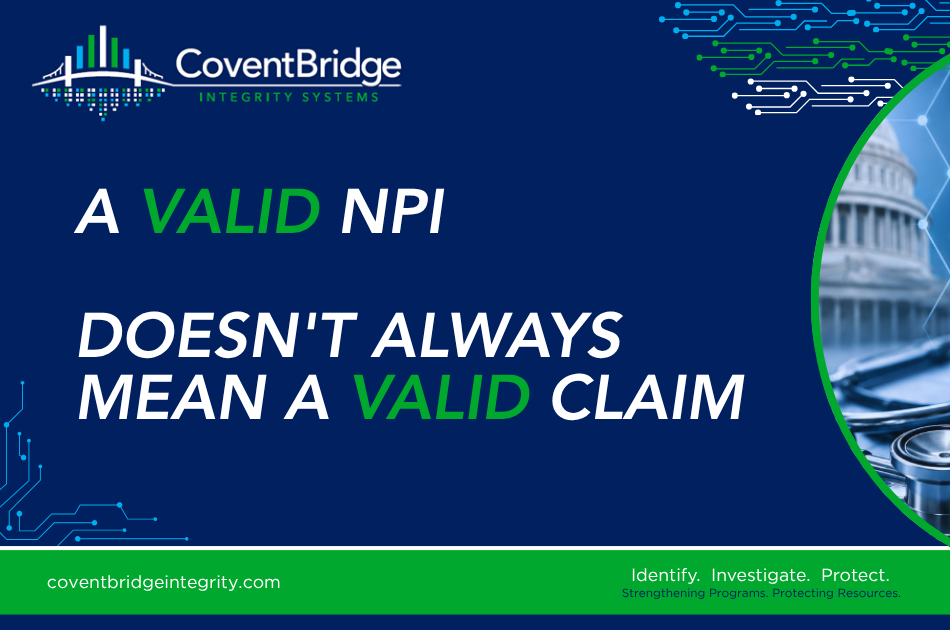
A provider identifier can be valid.
The person using it may not be.
DOJ recently announced charges in a Kentucky Medicaid case that illustrates why provider identity deserves attention as a program-integrity issue.
According to the August 27 indictment, a medical biller allegedly used the NPIs of licensed professionals without their authorization to submit thousands of fraudulent claims across multiple behavioral health providers.
The indictment also alleges fabricated assessments and treatment plans and claims for services that were never provided — including services purportedly delivered to Medicaid members who were incarcerated, hospitalized, or deceased. The allegations have not been proven, and the defendant is presumed innocent.
The larger lesson for payers is worth considering:
Credential validation and claim validation are not necessarily the same thing.
A legitimate provider identity can still be:
→ Misused
→ Shared
→ Stolen
→ Attached to services performed by someone else
→ Used to make an illegitimate service appear legitimate
The question isn’t simply:
“Is this provider licensed?”
It’s also:
“Is this actually the person who provided the service?”
That question often requires moving beyond the claim.
#ProviderIntegrity #Medicaid #HealthcareFraud #ProgramIntegrity #FWA #SIU #FraudInvestigations #BehavioralHealth #PaymentIntegrity #HealthcareAI